THE STORY (a deeply thoughtful and emotionally moving story of a refugee child)
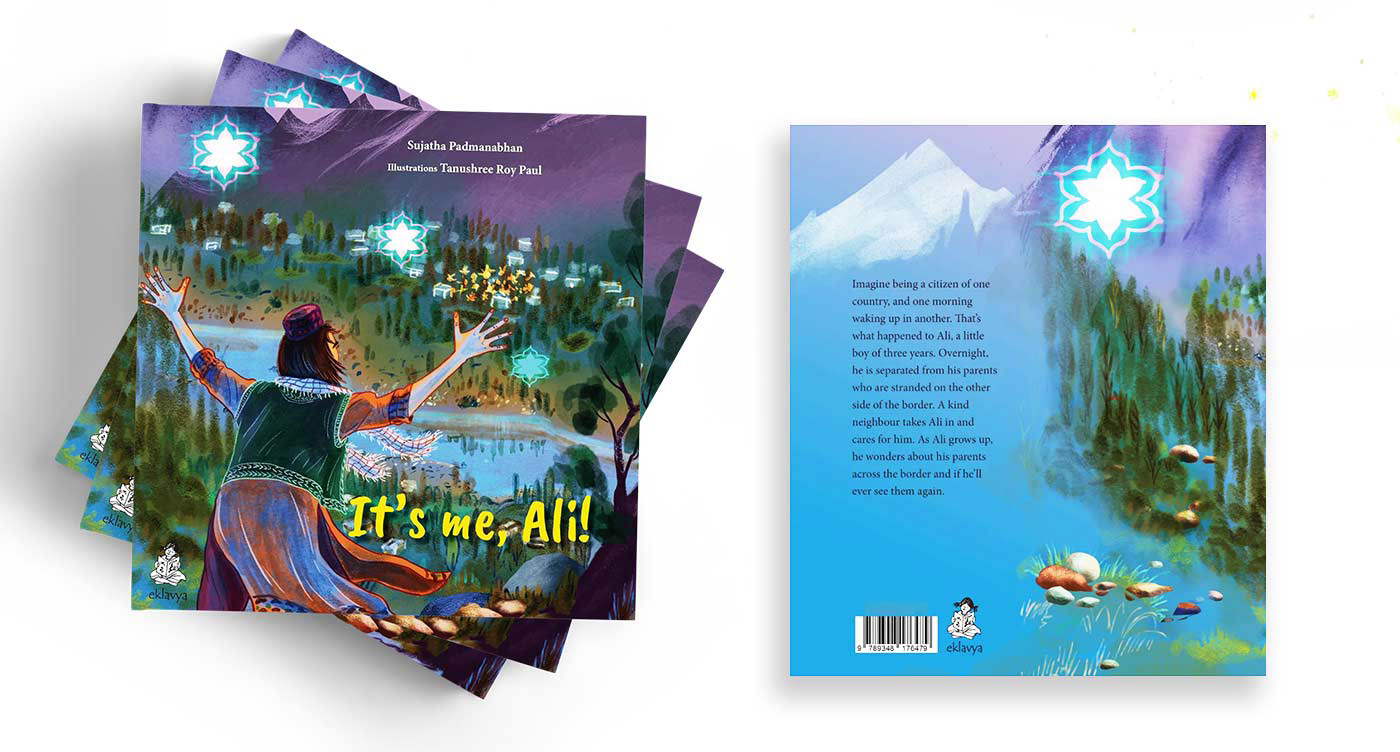
A young little boy, separated from his parents overnight, and now he is a citizen of a new country, as well as his neighbours! A kind neighbour takes him in, but as Ali grows, he longs to reunite with his family and wonders if he’ll ever see them again.It’s me, Ali! Is the story of all those fellow people who are made to be the dwellers of ’no man's land’ by none of their fault.
THE RESEARCH BOARD
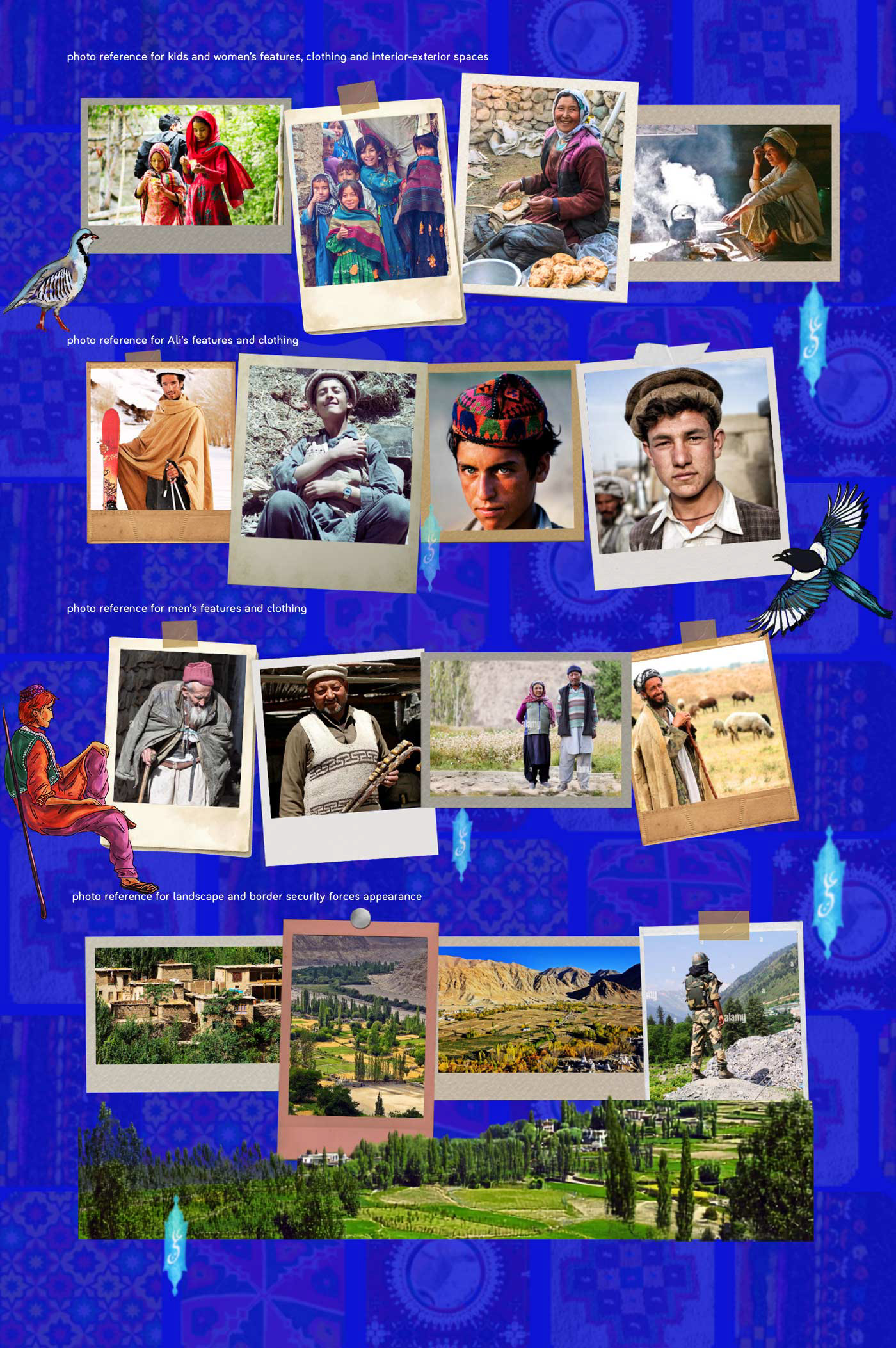
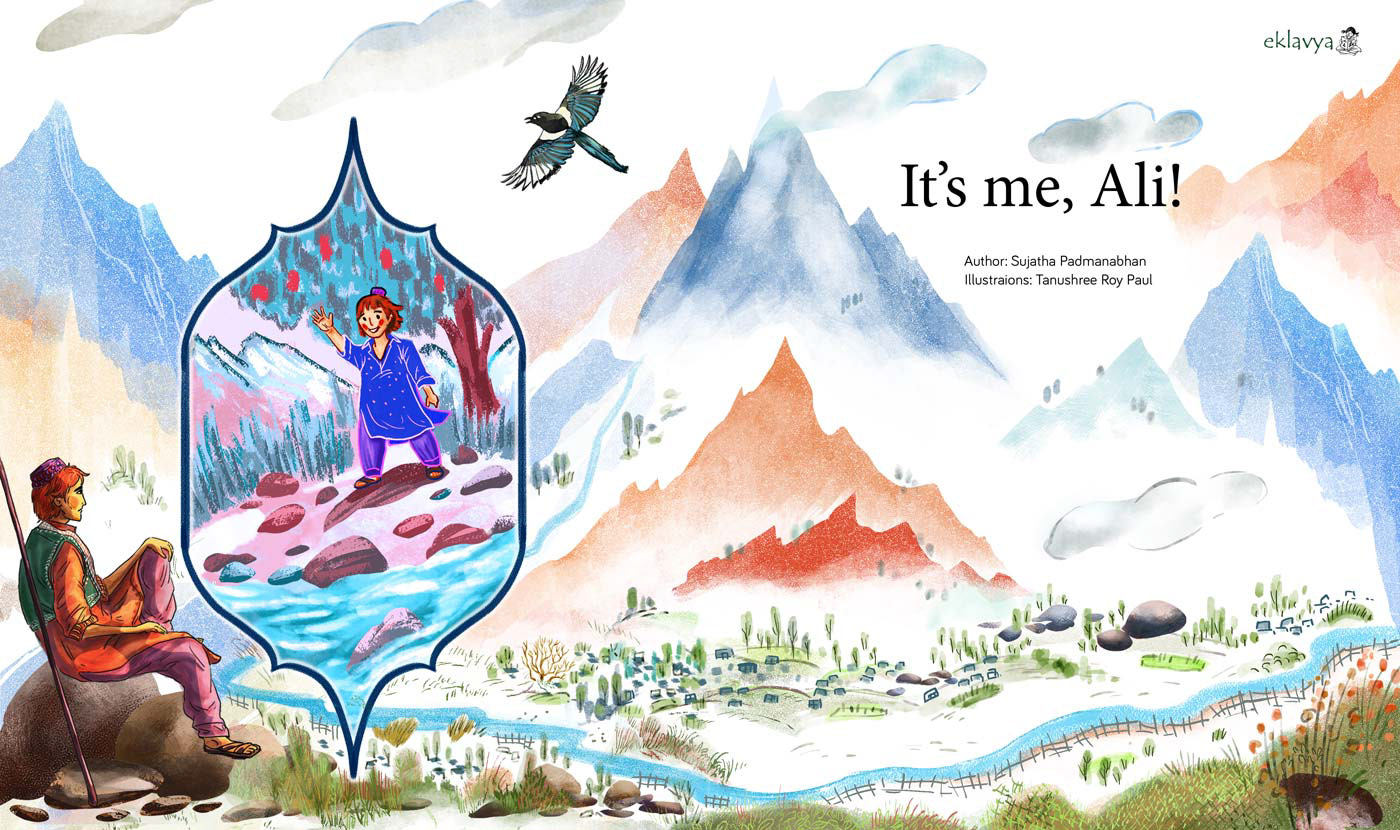
The story takes place in Nubra Valley, specifically in the village of Turtuk, which I discovered through research. My visual references were gathered from publicly available documentary footage and photographs, which I then used to create a mood board. This mood board focused on the people, textiles, architecture, livestock, geography, and border security forces present in the Nubra Valley. Furthermore, the Author, Sujatha Padmanabhan, provided essential resources that helped me understand the geography and ethnicity of the region, with a strong emphasis on the ecosphere.
photographic references of geography, people, textile, architecture and border security forces at Nubra Valley, Ladakh, India
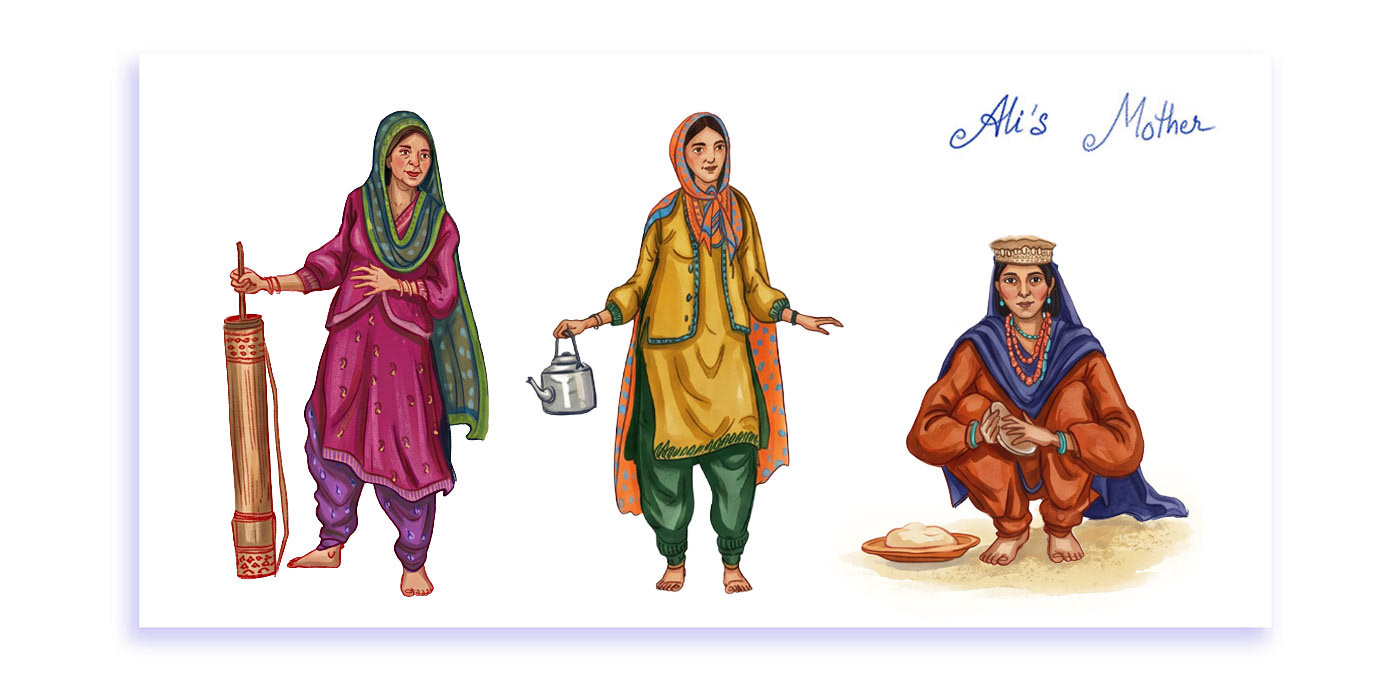
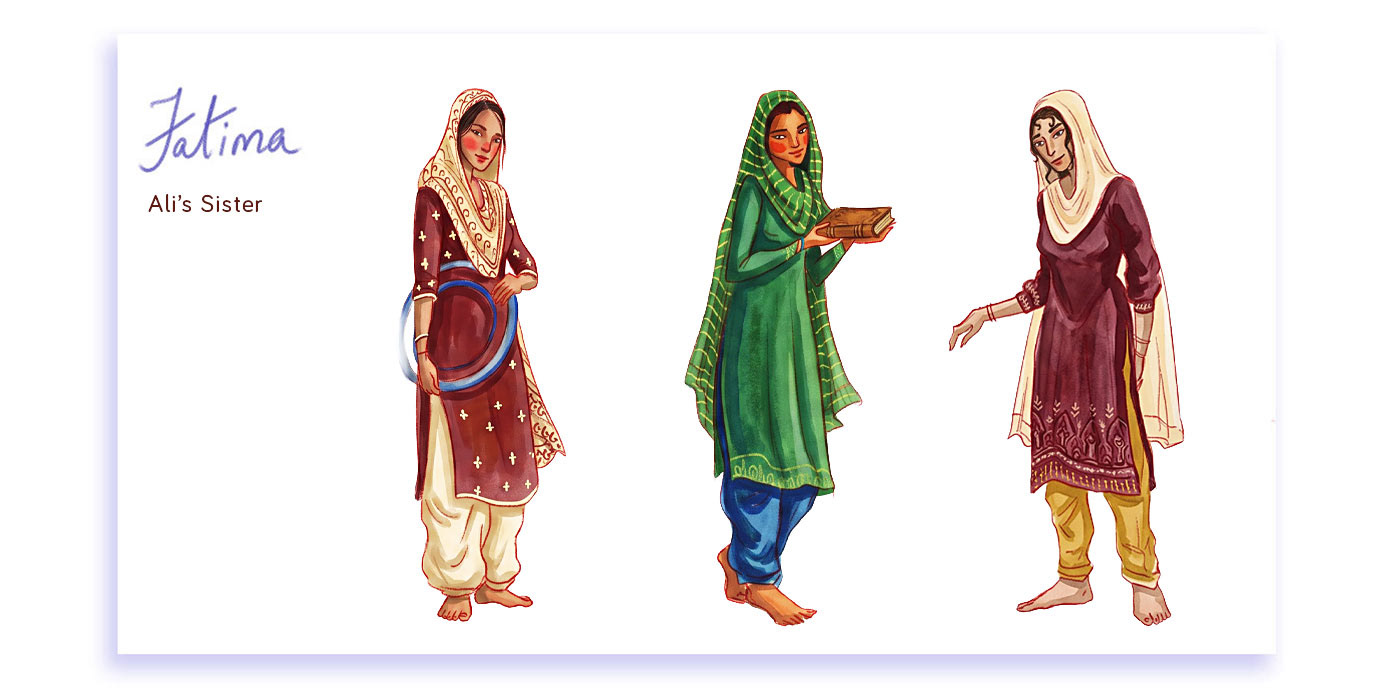
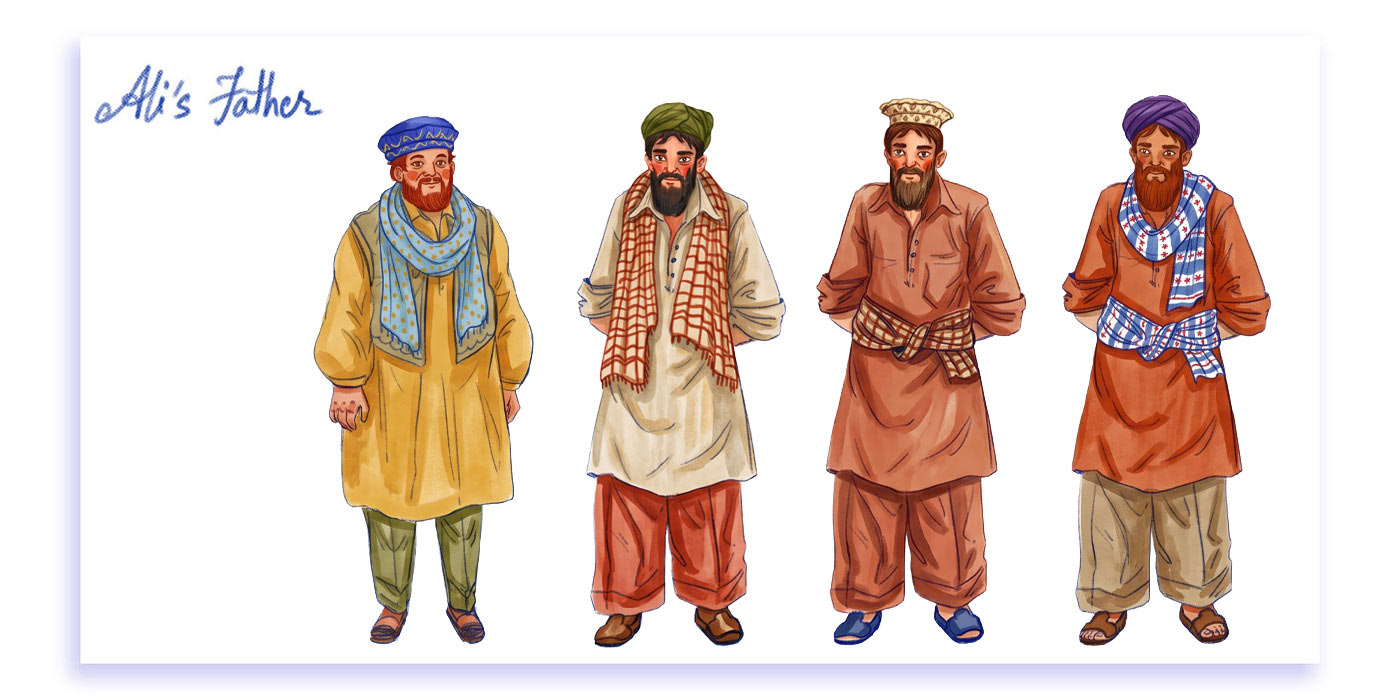
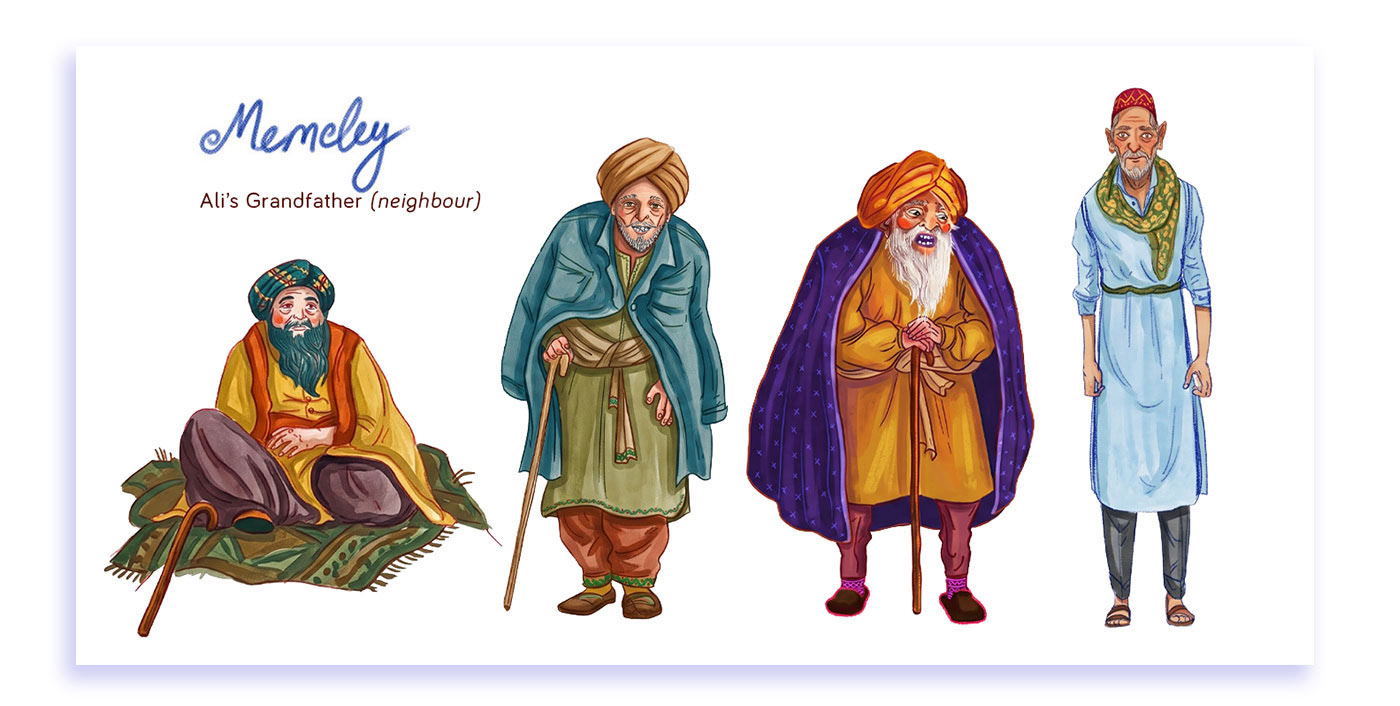
THE CHARACTERS
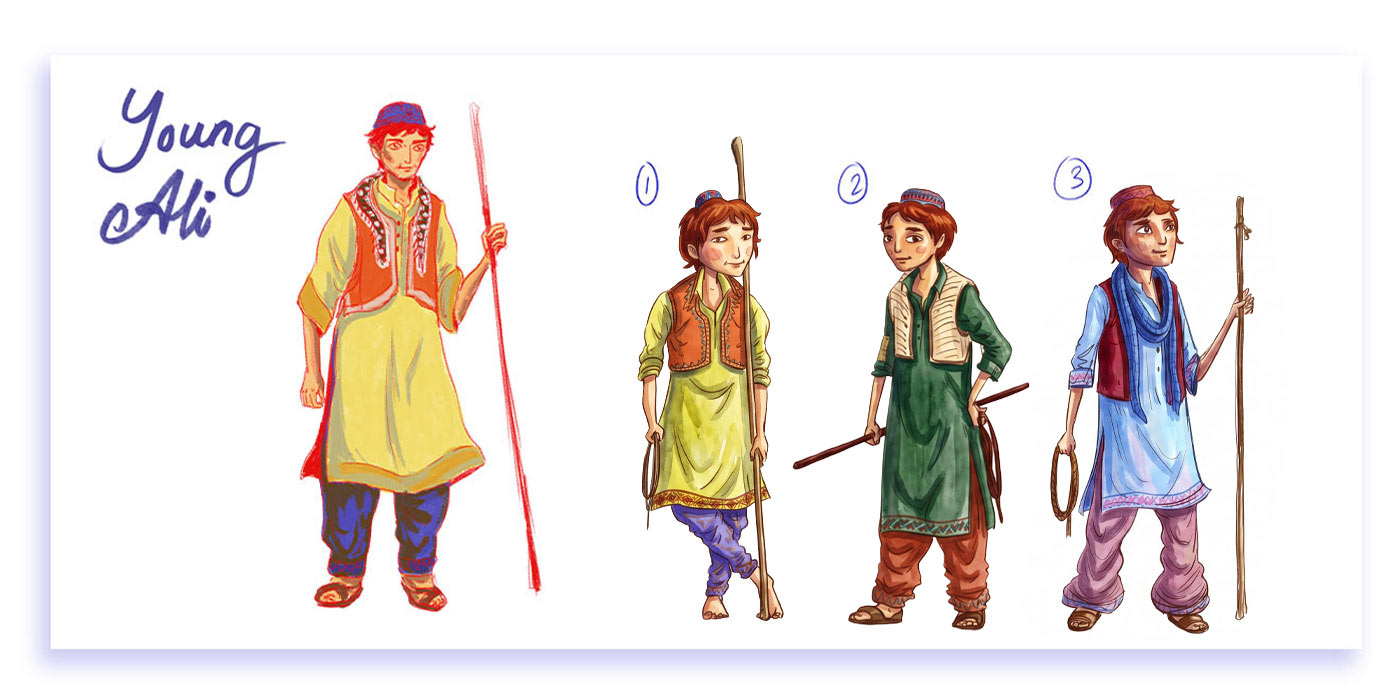
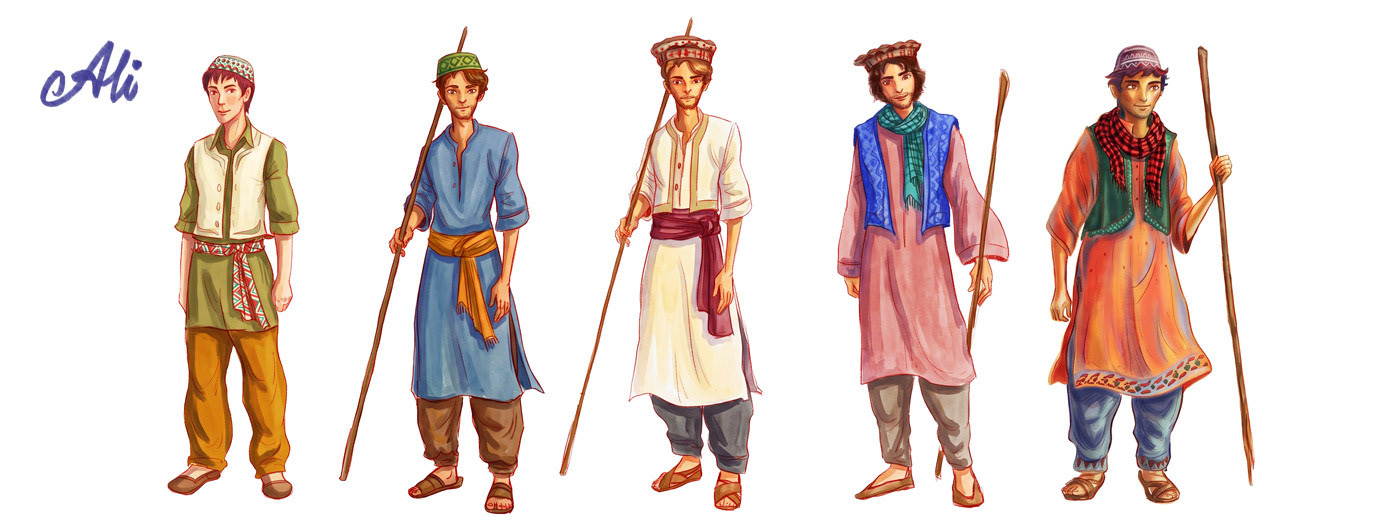
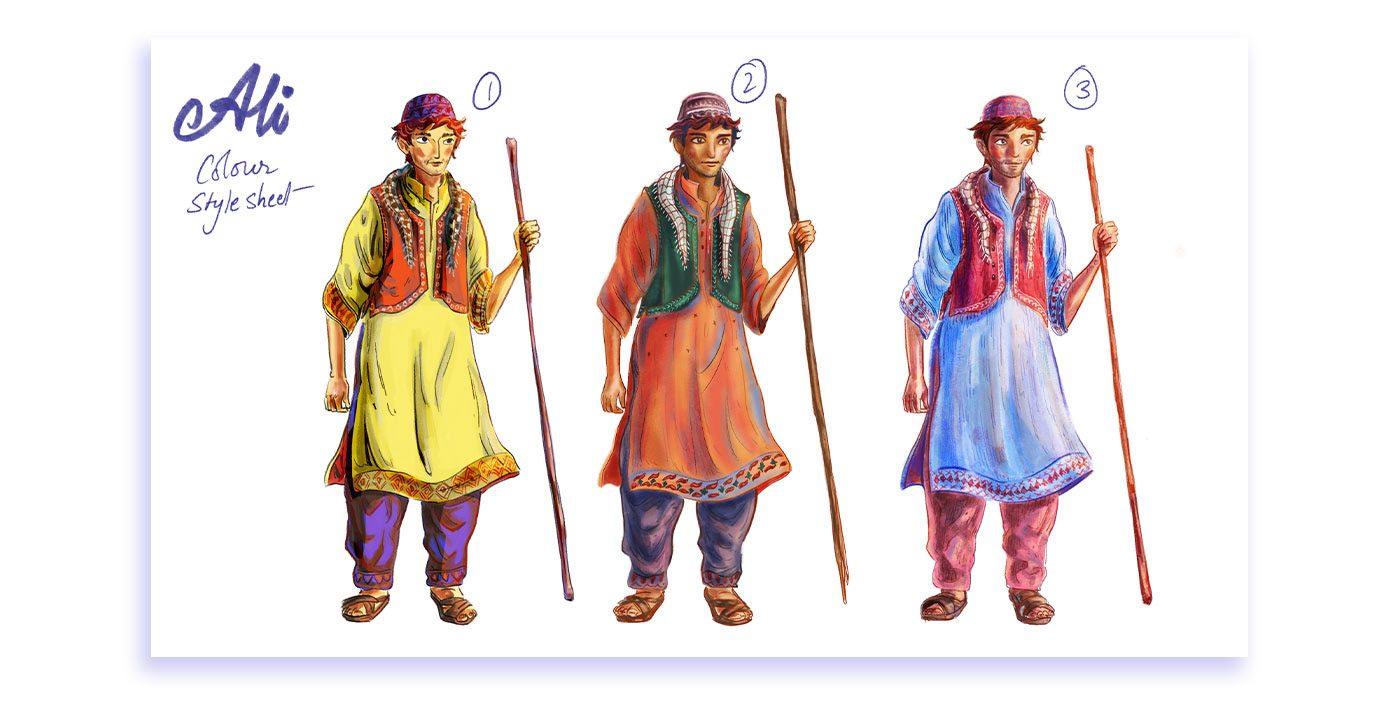
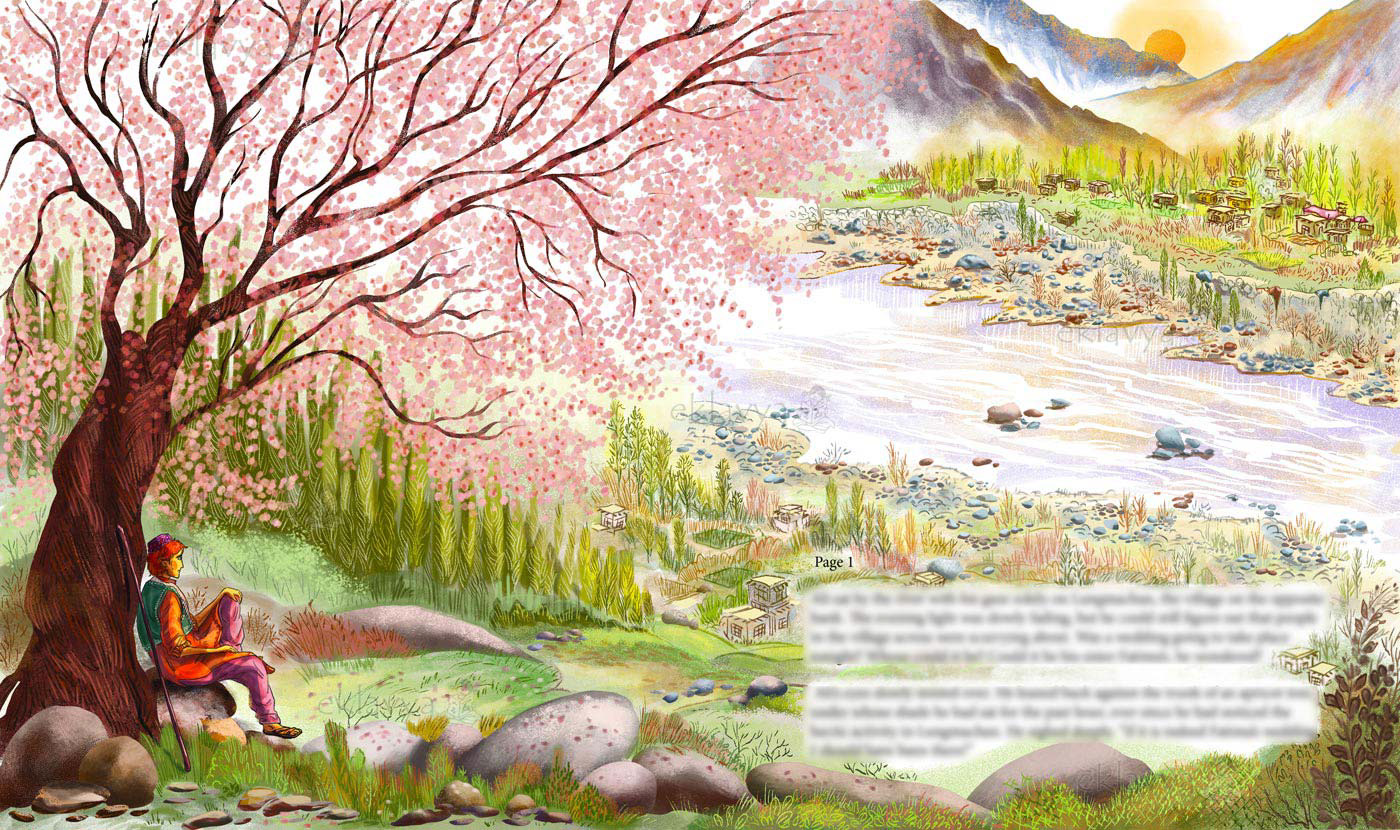
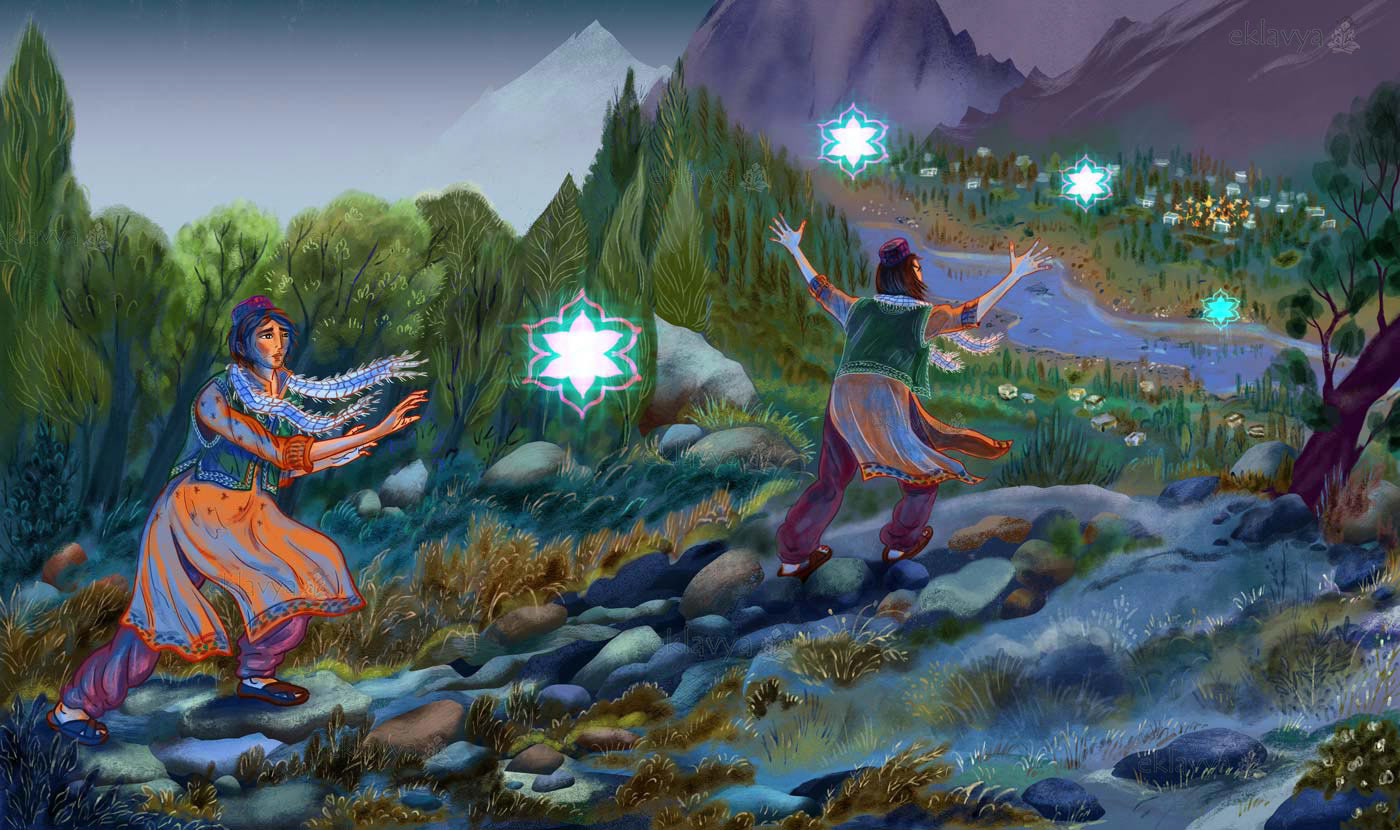
I struck a chance to explore Turtuk village, Nubra Valley in Ladakh, India, where this fictitious story is set. This remote village stands at the border of Pakistan, sharing culture, food, language and biodiversity including the river, but they don't share land. I sought to capture the essence of Nubra Valley in Ali’s world, weaving its landscapes and culture into the themes of loss, resilience, longing, and hope.
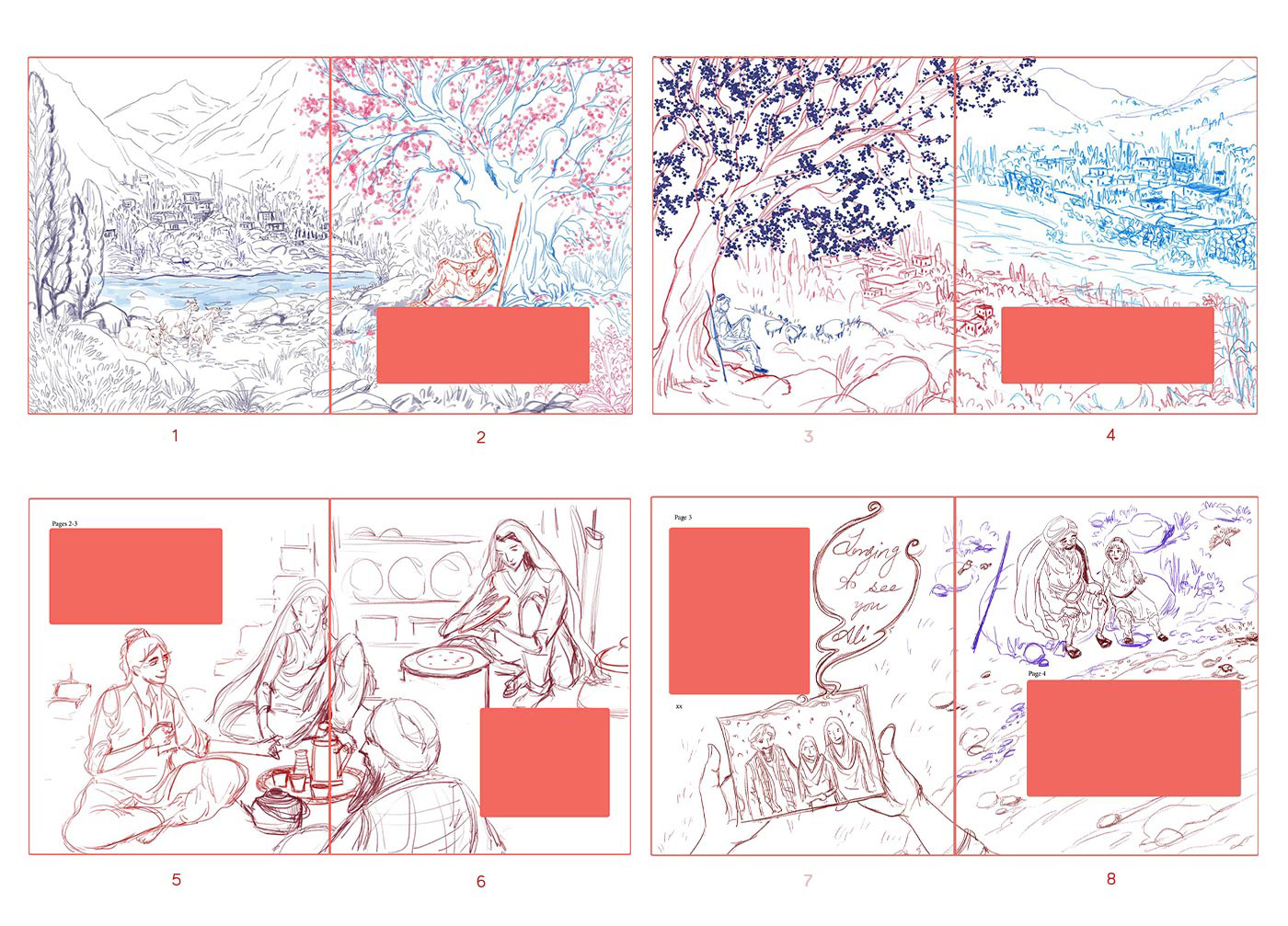
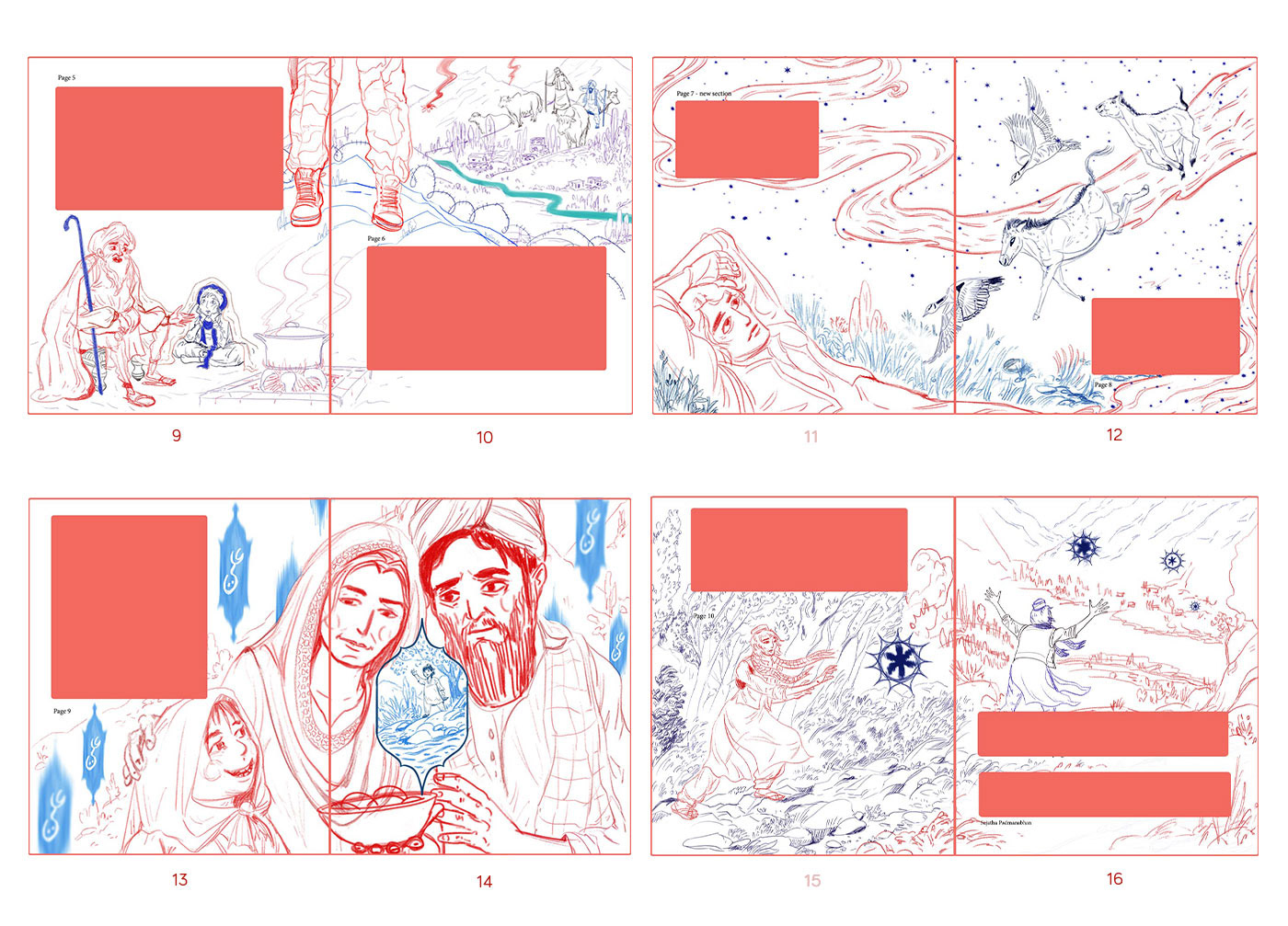
FEELING THE STORY: STORYBOARD
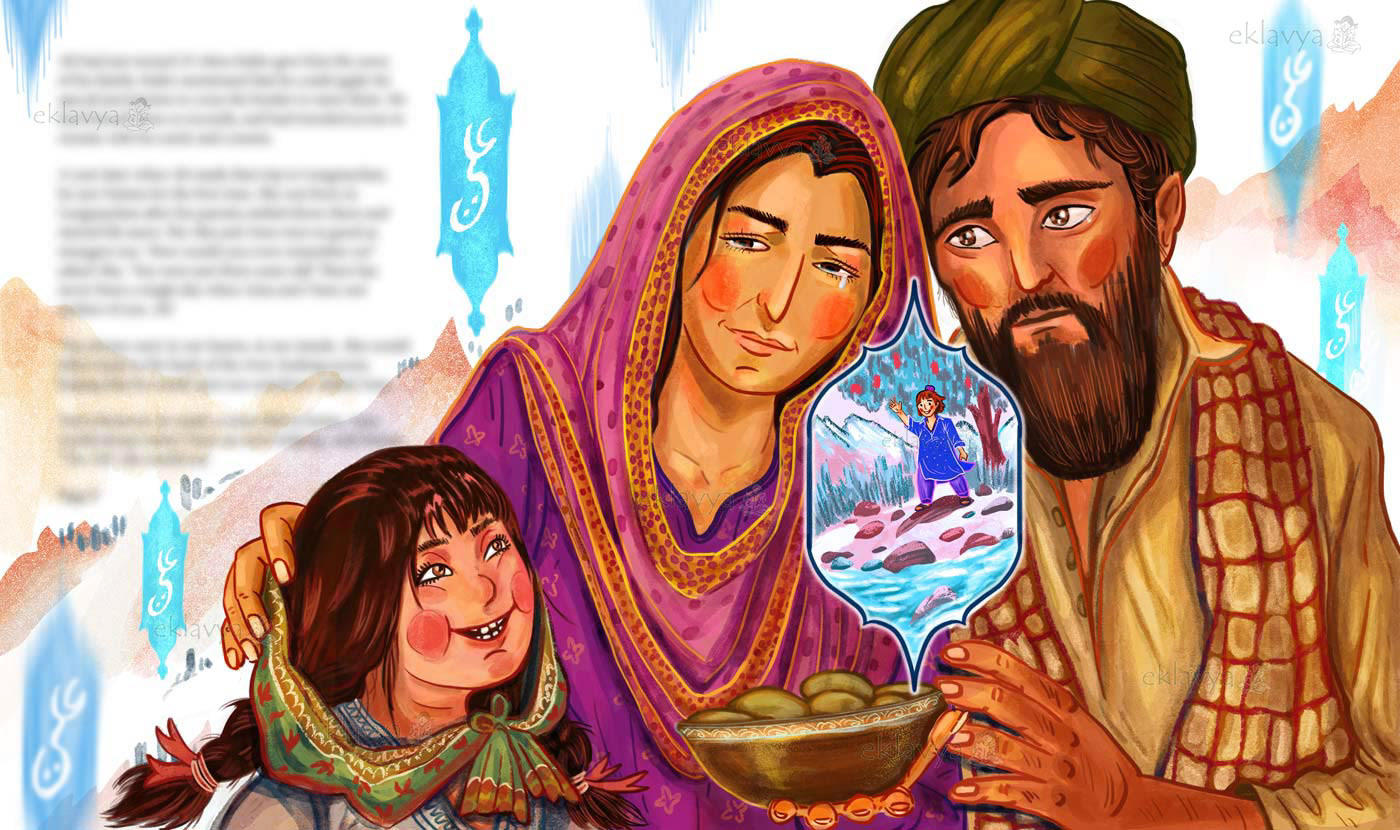
Upon receiving the script, I dedicated nearly a week to repeated readings. This immersive process was crucial in understanding the intricate emotions within the story: the distance, longing, unapproachability, and complex tenderness and distress in the relationships between the parents and child, and the people and their land. I allowed myself ample time to contemplate Ali's memory and his yearning to reunite with his family, to be a borderless being. This in-depth engagement with the narrative from the outset was, for me, the most vital starting point.
ILLUSTRATIONS
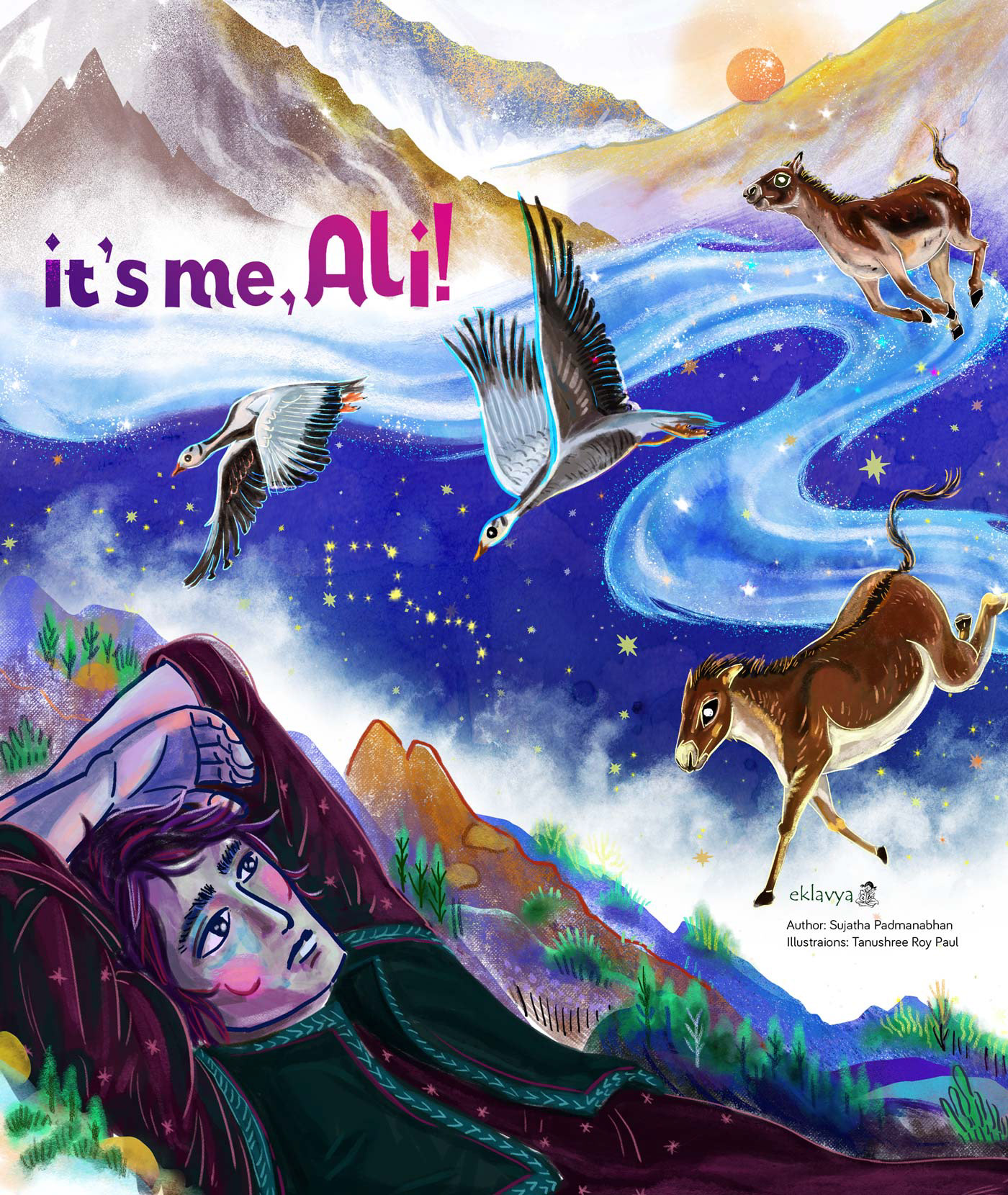
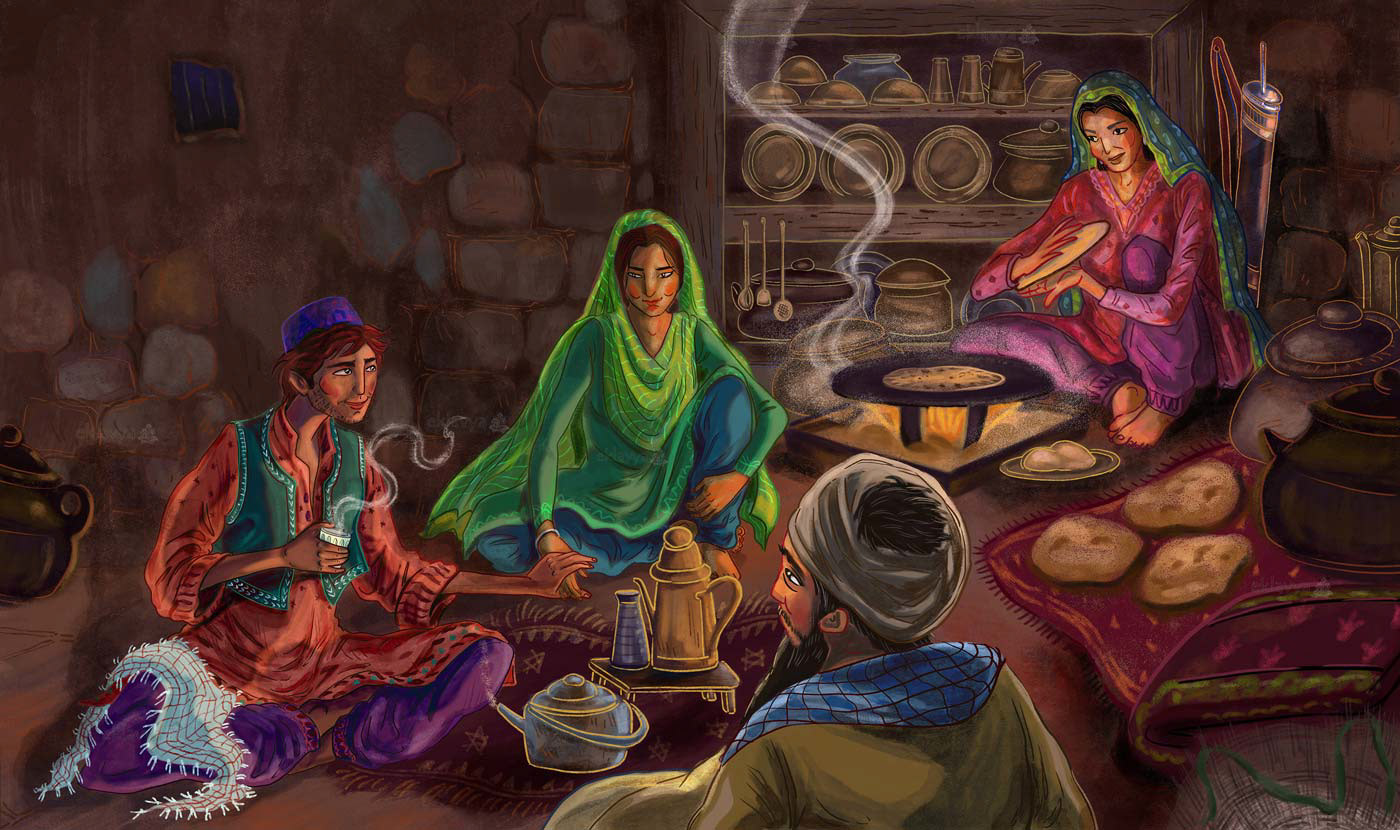
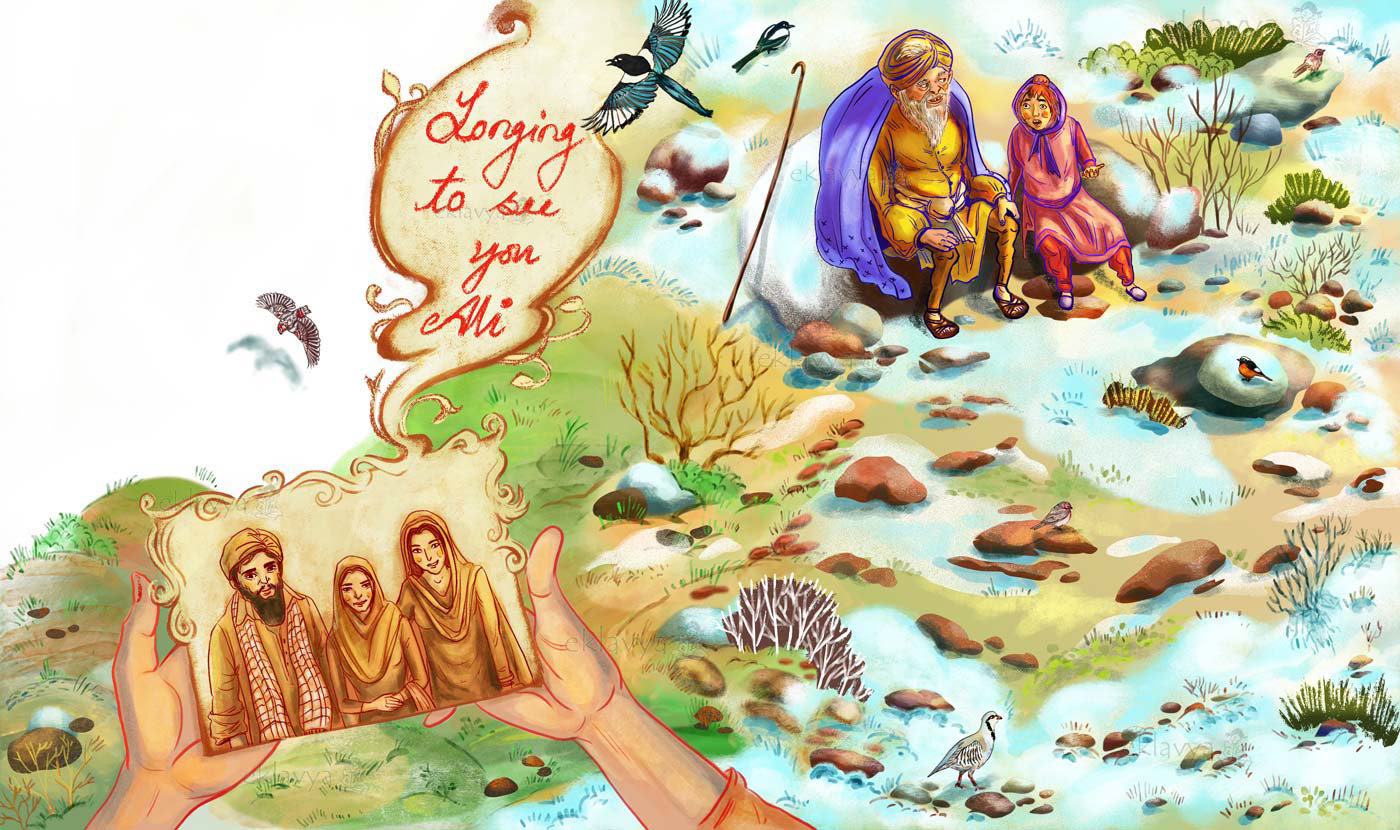
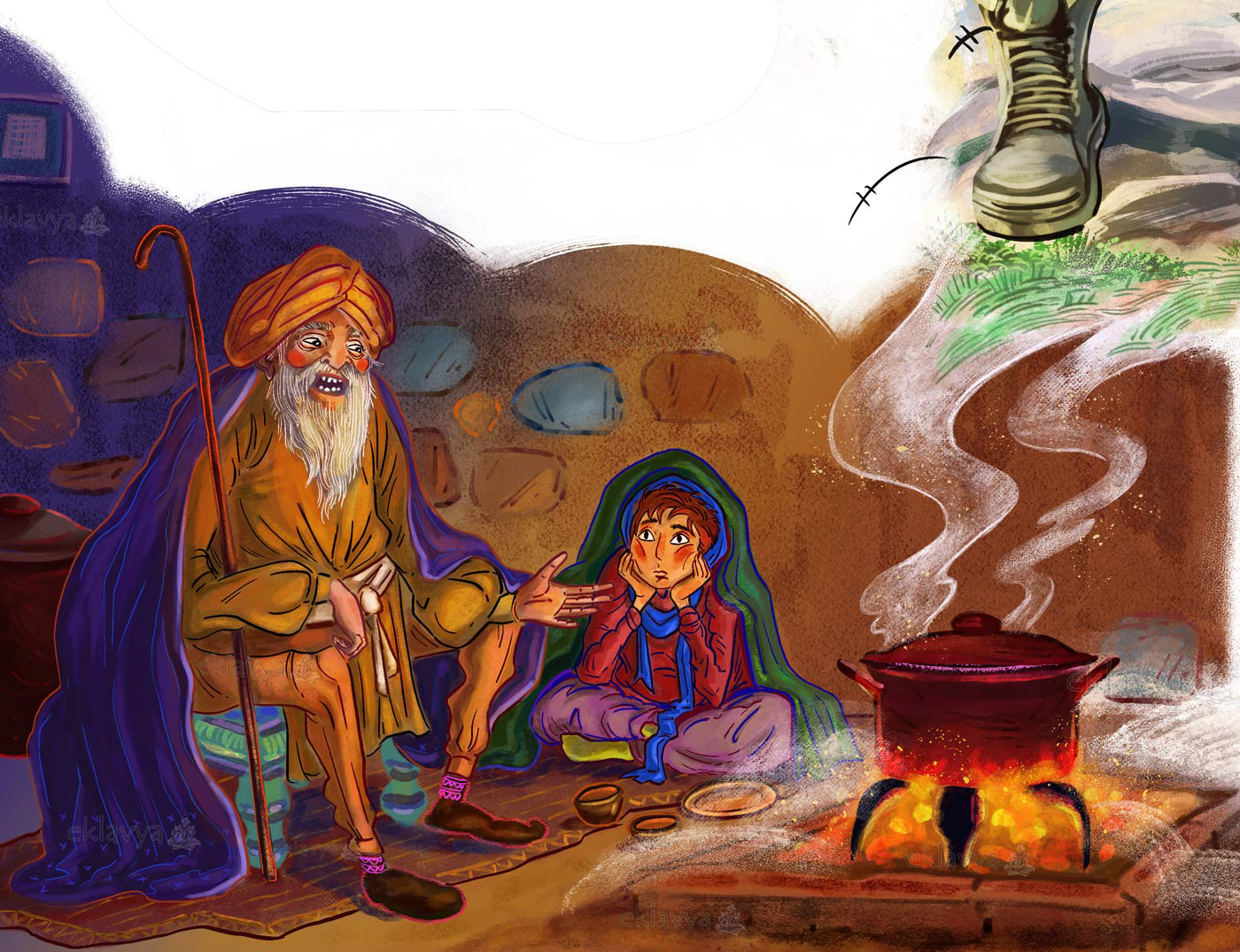
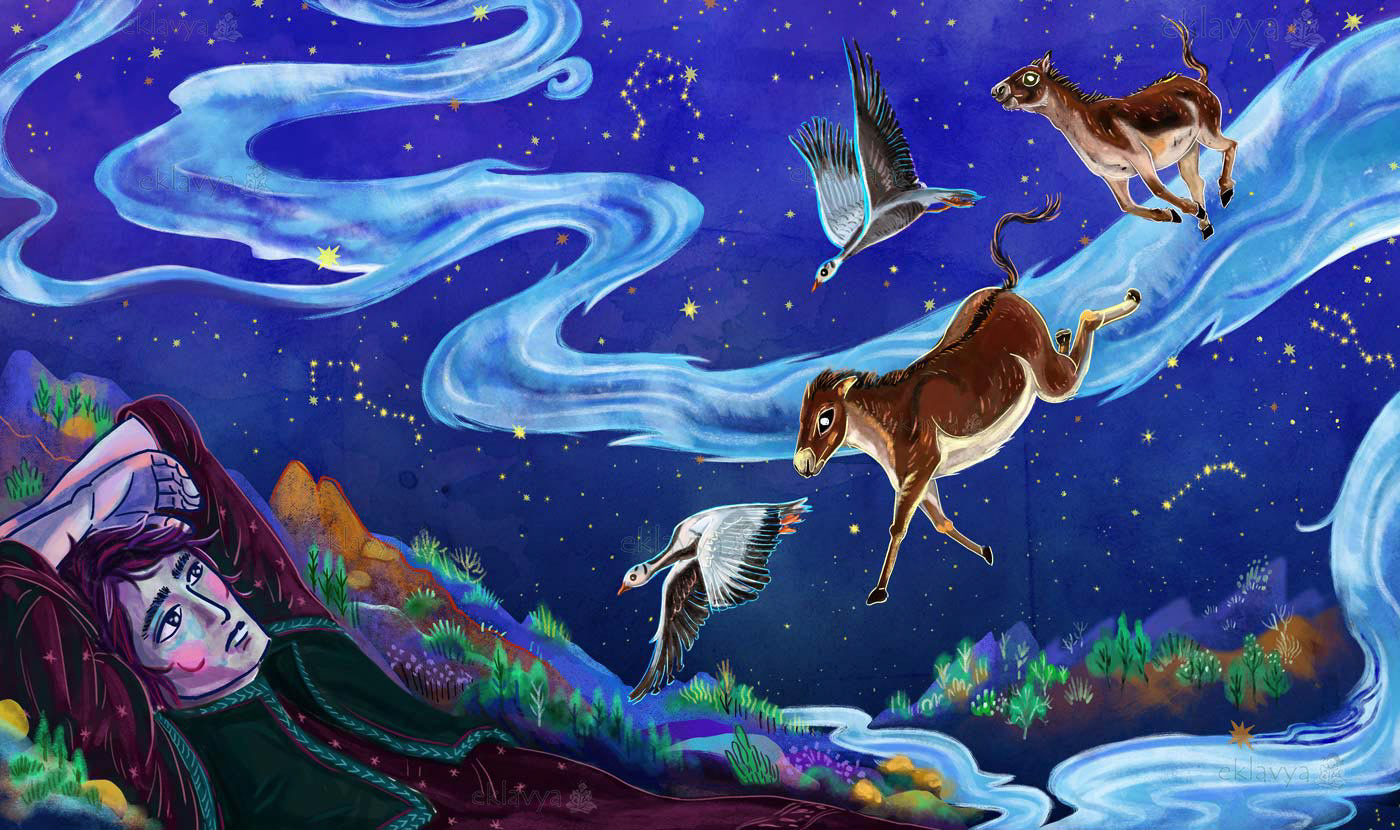
The stylistic approach was characterized by the integration of traditional storytelling elements and watercolor washes with modern digital illustration techniques. My objective was to cultivate an aesthetic that harmonized narrative and poetic components. Gestaltism (psychology) dictated the narrative's visual structure, linking scenes through an unseen current. This current begins with the river's flow, transitions to kitchen steam, traverses snowy landscapes, continues along border barbed wire, ascends to a celestial stream over open fields, follows the flow of parental prayers, and culminates in a mystical light near the river, creating a cyclical structure.
CREDITS
Publisher: Eklavya Foundation, Bhopal
Author: Sujatha Padmanabhan
Illustrations: Tanushree Roy Paul
Art Direction: Kanak Shashi
Translation: Vinatha Vishwanathan
www.kairospicture.com